I Do Not Want Libya to Be Held Ransom.
When a US government decision can shut off a tool the world depends on, the only real independence is building our own. Keep the money, keep the talent, keep the control - in Libya.
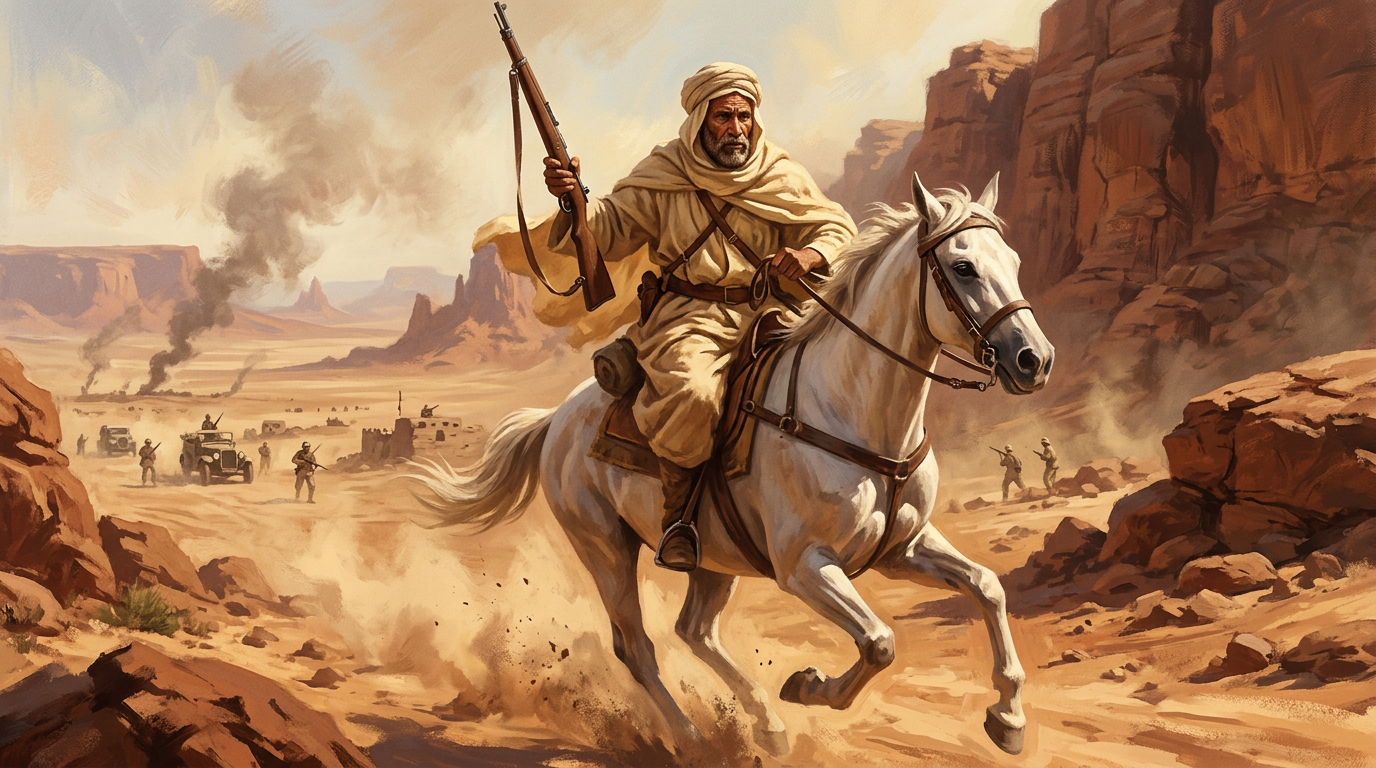
On 9 June 2026, Anthropic released Claude Fable 5, its most powerful public model. Three days later the US government ordered it shut off. Anthropic complied within hours. Foreign nationals lost access, inside the US and out, no warning, no notice. One day the tool was there. The next it was gone.
Read that again. A tool that thousands of businesses were starting to build on disappeared because of one government decision, made in one afternoon, in one country. Nobody outside that room had a say.
This is the reality of depending on someone else's technology. You do not own it. You rent it. And the landlord can evict you whenever it suits them.
So here is the question every Libyan should be asking. Do we build our own, or do we keep renting from people who can shut us off?
The money leaves and it does not come back
Be honest about what happens when a Libyan ministry, bank, or company hires a foreign firm to build its software.
The money leaves Libya. Every dinar of it. It pays foreign salaries, trains foreign engineers, and builds foreign companies. The firm finishes the job, takes the knowledge home, and leaves us a system nobody here understands. When it breaks, and it always breaks, we cannot fix it. So we pay them again. This is exactly the "المنظومة واقفة" problem: systems that sit dead because the people who built them are in another country and the people who need them are here.
We have been doing this for decades. We have spent enormous sums of money building other countries' technology sectors while our own engineers sit underused or leave the country entirely. We trained the world's talent with our money and kept almost none of it for ourselves.
That is not bad luck. That is a choice we keep making.
Local money builds a local economy
Now look at what happens when a Libyan company does the work instead.
The money stays here. It pays a Libyan engineer, who pays Libyan rent, shops at a Libyan business, and raises a Libyan family. That engineer learns, gets better, and trains five more. The expertise stays in the country and grows. The same dinar that vanishes when it goes abroad does real work over and over when it stays home.
This is not complicated and it is not idealism. It is arithmetic. A country that sends its technology work abroad sends its money and its future with it. A country that keeps the work keeps the wealth and builds its people. Every other developed nation figured this out. There is no reason Libya cannot.
Talent is the one thing they cannot take back
Foreign investment gets pulled. Foreign tools get switched off. Foreign companies pack up and leave the moment it stops being profitable. There is exactly one asset nobody can take back from Libya once we have it: the skill inside the heads of Libyan engineers.
A foreign consultant flies in, bills us, and flies out. He leaves nothing but an invoice. A Libyan engineer trained properly stays for thirty years. He builds companies, fixes the systems that break, and teaches the next generation. One is an expense. The other is an investment that pays forever.
And a properly trained engineer is not helpless when a tool gets taken away. He uses the best technology when he has it and works around it when he does not, because his ability lives in his understanding, not in a subscription that a foreign government can cancel. That is the difference between a country that depends and a country that is capable.
We have done this before
Omar Mukhtar did not fight for twenty years so that Libya could be free in name and dependent in everything that matters. He understood something simple and permanent: a people that relies on others to control its land does not control its future. The colonisers eventually left. The principle did not.
The fight today is not with rifles in the Jebel. It is quieter and it is fought with knowledge, with engineers, with the decision to build at home instead of paying others to build for us. But it is the same principle. Independence is not a flag and an anthem. It is the ability to stand on your own. A Libya that cannot build its own technology, that waits for foreign companies and foreign tools and foreign permission, is not yet fully independent. It is something less than what those who came before us paid for.
We owe them more than that.
Pick one
There are two roads and we have to choose.
Keep paying foreigners to build and rebuild the same systems, keep sending the money and the knowledge out of the country, and keep living at the mercy of decisions made in capitals that do not think about us at all.
Or invest that same money in Libyans. Build it here. Keep the talent, keep the money, keep the control. Build a technology sector that belongs to Libya and answers to Libya.
The first road is easy and it keeps us poor and dependent. The second is harder and it is the only one that leads anywhere worth going.
LeptisCode chose the second road. We train Libyan engineers and we build software in Libya to the same standard as anyone in London or San Francisco, using the best tools in the world without being a slave to any of them. We are not against working with the world. We are against the world profiting at the expense of Libyans.
The tools can be taken away. A trained Libyan engineer, and the money that stays in Libya when we build for ourselves, cannot.
Build local. Keep it here. It is our country and it should be our technology.
I do not want Libya to be held ransom.
If you believe Libya's digital future belongs in Libyan hands, let's talk.